
A sound betting MLB strategy is defined as a data-informed, disciplined approach to wagering on baseball that combines advanced pitcher metrics, situational awareness, and bankroll control. Unlike football or basketball, MLB's 162-game season creates a unique environment where variance runs high and edge compounds slowly. Starting pitchers drive moneylines, run lines, and totals more than any other single factor. Bettors who master pitcher analysis, understand park and weather effects, and manage their bankroll with patience consistently outperform those who bet on instinct alone.
What is the best betting MLB strategy for consistent wins?
The most effective MLB betting strategy starts with pitcher evaluation, and the best tool for that job is FIP, or Fielding Independent Pitching. FIP isolates strikeouts, walks, and home runs to measure what a pitcher actually controls, removing the noise of defensive performance behind him. ERA can mislead you badly. A pitcher with a 4.50 ERA and a 3.20 FIP is likely pitching better than his surface numbers suggest, and the market often hasn't caught up yet.
Statcast data adds another layer. xBA and barrel percentage predict future player performance regressions better than conventional stats. A pitcher posting a low ERA but allowing a high barrel rate is a regression candidate. That's a signal to fade him before the market adjusts.
Pitcher splits matter just as much as raw metrics. Some starters perform dramatically better at home due to park dimensions that suit their pitch mix. Others struggle against left-handed lineups despite solid overall numbers. Checking home/away splits and handedness splits gives you a sharper read on true matchup value. Home and away splits reveal how park effects and travel fatigue shape real team performance.
- FIP: Use it instead of ERA to evaluate pitcher quality without defensive noise.
- xBA: Flags hitters and pitchers due for positive or negative regression.
- Barrel%: High barrel rates against a pitcher signal future trouble, even if current ERA looks clean.
- Velocity trends: A pitcher losing 1–2 mph on his fastball over recent starts often signals fatigue or injury.
- Splits: Always check performance vs. left-handed and right-handed lineups before betting.
Pro Tip: Combine FIP with recent velocity data. A pitcher with a strong FIP who is also gaining velocity is a buy. One with a rising FIP and declining velocity is a strong fade candidate.
How do ballpark and weather factors affect MLB totals?
Ballpark and weather conditions directly change how many runs score in a game, making them non-negotiable inputs for totals betting. High-altitude parks like Coors Field inflate scoring, while pitcher-friendly environments like Petco Park suppress it. Ballpark and weather impacts can add or subtract 1–2 runs per game on average. That swing is large enough to flip an over/under bet from a winner to a loser.
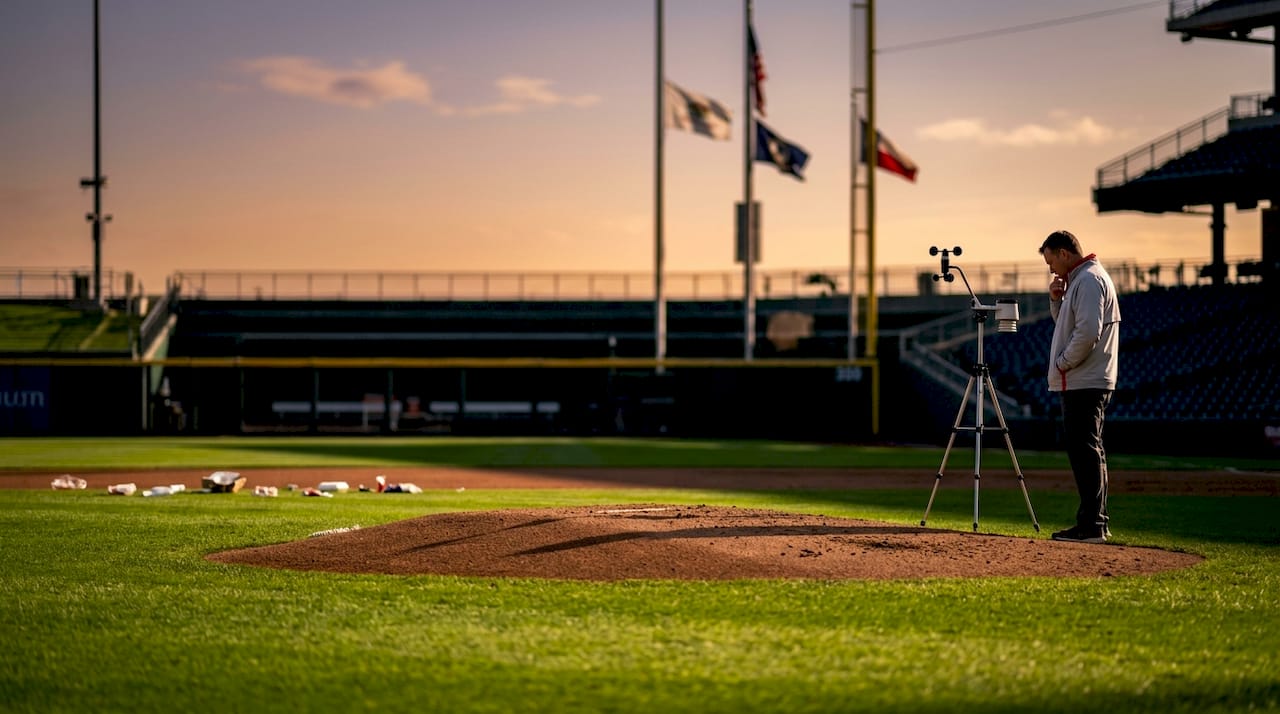
Temperature and wind direction are the two weather variables that move totals most. Cold air is denser, which reduces ball carry and suppresses scoring. Wind blowing in from center field can kill what would otherwise be home runs. Wind blowing out to left or right field in a hitter-friendly park can push a game well over its posted total.
| Ballpark | Run Environment | Key Factor |
|---|---|---|
| Coors Field (Colorado) | Very high | Altitude reduces air resistance |
| Petco Park (San Diego) | Low | Marine layer suppresses ball flight |
| Fenway Park (Boston) | Moderate to high | Green Monster creates doubles, gaps |
| Oracle Park (San Francisco) | Low | Cold marine air, deep dimensions |
| Great American Ball Park (Cincinnati) | High | Small dimensions, hitter-friendly air |
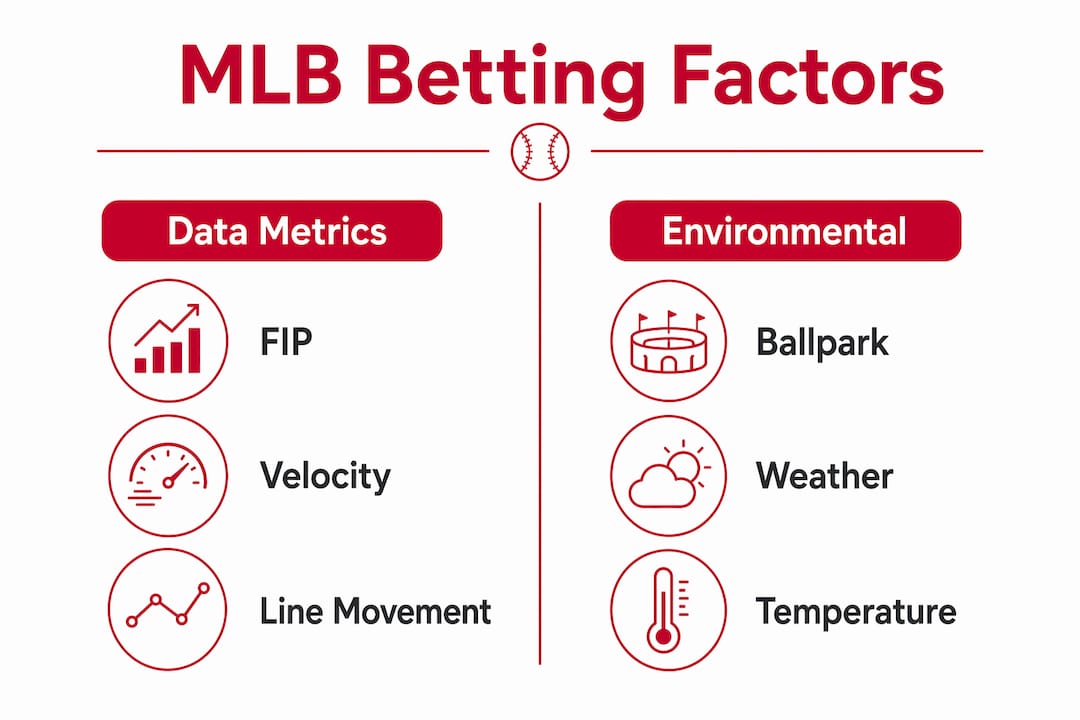
Humidity also plays a role, though it's less dramatic than altitude or wind. High humidity makes air slightly less dense, which can add modest carry to the ball. The bigger practical point is this: always check the weather forecast within two hours of first pitch. Lines are set hours in advance, and late wind shifts or temperature drops create exploitable gaps between the posted total and the actual run environment.
Pro Tip: Use a weather service that shows wind speed and direction by inning, not just game-time conditions. Wind shifts mid-game can change scoring patterns in ways the opening total never accounted for.
How do you find value betting MLB underdogs?
MLB underdogs represent the single most underexploited edge in baseball betting. MLB underdogs win roughly 38–40% of games, and a +150 underdog only needs to win 40% of the time to break even. That math creates real profit potential when you identify dogs whose true win probability exceeds what the market implies.
Here is a structured process for finding underdog value:
- Calculate the implied probability. Convert the moneyline to a win percentage. A +150 line implies a 40% win probability. If your analysis says the team wins 45% of the time, you have a positive expected value bet.
- Evaluate the starting pitcher matchup. A quality underdog starter with a strong FIP facing an overrated favorite starter is the most common source of underdog value.
- Check the lineup context. Underdogs with a well-rested bullpen and a favorable platoon matchup against the opposing starter are structurally better than their odds suggest.
- Factor in park and weather. Underdog teams that play better in neutral or pitcher-friendly parks gain extra value when the game is played in those conditions.
- Avoid chasing underdogs blindly. A team that is a +200 dog because its ace is injured is not a value play. The market priced that in. Look for mispricing, not just big numbers.
The biggest mistake bettors make with favorites is assuming a strong team always wins. In baseball, even the best teams lose 35–40% of their games across a full season. Betting heavy favorites at -200 or worse requires an extremely high win rate just to break even, and that math rarely works in your favor over time.
How should you manage your bankroll across a 162-game MLB season?
Bankroll discipline is the single factor that separates bettors who survive a full MLB season from those who bust out by june. Over-betting in the MLB season leads directly to bankroll depletion. Professional bettors avoid betting every game to reduce variance and limit losses. The season is long enough that discipline compounds into a meaningful edge.
The Probettorsports wager method emphasizes flat betting and proportional sizing as the two most reliable staking approaches for baseball. Flat betting means wagering the same dollar amount on every play regardless of confidence level. Proportional sizing adjusts bet size as a fixed percentage of your current bankroll, which naturally scales down during losing streaks and up during winning ones.
- Flat betting: Wager 1–2% of your total bankroll per game. Simple, consistent, and protects against variance.
- Proportional sizing: Bet a fixed percentage of your current bankroll, recalculated weekly or monthly.
- Game selection: Bet only games where you have a clear edge. Skipping games is a strategy, not a weakness.
- Streak management: Never increase bet size to chase losses. That behavior destroys bankrolls faster than any losing streak.
- Record keeping: Track every bet, the reasoning behind it, and the outcome. Patterns in your losses reveal fixable mistakes.
The 162-game season demands that bettors manage their engagement carefully to avoid emotional and financial burnout. Betting 15 games a week with no clear edge is not a strategy. It's a fast path to a depleted account and a frustrated mindset.
How do you read line movement and sharp money signals?
Line movement is the market's way of telling you where informed money is going. When 80% of public bets favor one side but the line moves against that side, professionals are almost certainly betting the other way. That reverse line movement is one of the clearest sharp money signals available to recreational bettors.
Public bettors consistently overvalue popular teams. The New York Yankees and Los Angeles Dodgers attract disproportionate public money regardless of matchup quality. When lines on those teams inflate beyond what the matchup justifies, fading the public becomes a statistically sound approach. Sharp money detection through line monitoring gives patient bettors a consistent edge over the casual market.
- Reverse line movement: Line moves opposite the public betting percentage. Follow the line, not the crowd.
- Steam moves: Sudden, sharp line shifts across multiple books indicate coordinated sharp action. React quickly or miss the value.
- Opening line vs. closing line: A team that opens at -115 and closes at -130 attracted sharp money. The closing line is the most efficient price.
- Consensus data: Track public betting percentages on reputable data aggregators to spot when the public is heavily one-sided.
Pro Tip: The daily results history at Probettorsports tracks how picks perform against closing lines, which is one of the best measures of long-term betting skill.
Key Takeaways
Effective MLB betting requires combining advanced pitcher metrics, situational factors, underdog value identification, disciplined bankroll management, and sharp money awareness to build a sustainable long-term edge.
| Point | Details |
|---|---|
| Prioritize FIP over ERA | FIP removes defensive noise and reveals true pitcher quality before the market adjusts. |
| Factor in park and weather | Ballpark altitude, wind direction, and temperature can shift run totals by 1–2 runs per game. |
| Target underdog value | MLB underdogs at +150 only need a 40% win rate to break even, creating structural profit opportunities. |
| Bet selectively, not constantly | Flat betting 1–2% of bankroll per game and skipping low-edge games protects capital across 162 games. |
| Follow sharp line movement | Reverse line movement signals professional money and often points to the correct side of a bet. |
What years of MLB betting actually taught me
Most bettors lose in baseball not because they pick wrong teams, but because they bet too many games. The 162-game schedule feels like an opportunity. It's actually a trap. The volume tempts you into betting games where you have no real edge, and those bets erode the profit from your best plays.
The metrics matter, but context matters more. I've seen bettors with perfect FIP analysis lose money because they ignored a cold front rolling into a ballpark or missed that a pitcher was on a short rest. Advanced stats give you the foundation. Situational awareness is what separates a good analysis from a profitable bet.
The sharpest thing I ever did was cut my bet volume in half and double my research time per game. My results improved immediately. Patience is not a passive virtue in baseball betting. It's an active, profitable decision made every time you pass on a game that doesn't meet your standard.
If you're serious about improving, start tracking every bet with a reason attached. Not just the outcome. The reason. You'll find patterns in your losses that no stat sheet will show you.
— ROBERT
Probettorsports: expert MLB picks backed by real data
Serious bettors know that research takes time, and the MLB season moves fast. Probettorsports delivers daily expert picks built on the same advanced metrics and situational analysis covered in this guide, so you spend less time digging and more time making informed decisions.

Every pick at Probettorsports comes with transparent reasoning, and the subscription plans are structured for bettors at every level. The track record is public. The methodology is clear. Whether you're refining your own baseball betting strategies or looking for a reliable second opinion on key matchups, Probettorsports gives you the edge that consistent, data-driven analysis provides. Check the responsible gambling resources to keep your approach sustainable all season long.
FAQ
What does FIP measure in MLB betting analysis?
FIP, or Fielding Independent Pitching, measures only the outcomes a pitcher directly controls: strikeouts, walks, and home runs. It removes defensive performance from the equation, making it a more reliable predictor of future results than ERA.
How much should I bet per MLB game?
Flat betting 1–2% of your total bankroll per game is the standard recommendation for managing variance across a long season. Betting more than that on any single game exposes you to outsized losses during inevitable cold streaks.
Why do MLB underdogs offer good betting value?
MLB underdogs win roughly 38–40% of games, and a +150 underdog only needs a 40% win rate to break even. That structural dynamic creates profit opportunities when your analysis identifies dogs whose true win probability exceeds the implied market odds.
What is reverse line movement in baseball betting?
Reverse line movement occurs when a line moves against the direction of public betting percentages. When 80% of bets favor one team but the line moves toward the other, sharp professional money is driving the shift.
How do weather conditions affect MLB totals bets?
Wind direction, temperature, and altitude directly change how far a baseball travels, which affects scoring. High-altitude parks like Coors Field and wind blowing out to the outfield push totals higher, while cold air and inward wind suppress run scoring.